Longevity: It’s Not Just About Living Longer, But Living Better
For a long time, health conversations focused on lifespan: How can we live longer?
Today, the conversation is shifting toward a broader concept: longevity.
Longevity is not simply about adding more years to life. Increasingly, the focus is on healthspan — the years of life spent in good health, with physical and mental function maintained for as long as possible.
This perspective closely aligns with the World Health Organization’s approach to healthy ageing, which emphasizes maintaining the functional abilities that allow people to continue doing the things they value throughout life.[1]
In other words, the goal is not simply to live longer.
It is to support the body and mind so that we can live well for longer.
What Does Longevity Really Mean?
There is no single food, supplement or lifestyle habit that determines how we age.
Healthy ageing is influenced by a complex combination of genetics, nutrition, physical activity, sleep, stress, social connection, environmental factors and access to healthcare.
Many of these factors interact with each other throughout our lives.
That is why longevity should not be viewed as a short-term intervention or an “anti-ageing” strategy. A more useful approach is to think about the everyday habits that help maintain our physical and mental capacities over time.
Nutrition is one important part of this picture.
Nutrition and Healthy Ageing
Our nutritional needs may change throughout life, but the fundamentals of a balanced diet remain important at every age.
Adequate protein, dietary fibre, vitamins, minerals and healthy sources of fat all contribute to normal physiological functions.
And when we talk about dietary fat, quality matters.
Fat is sometimes discussed as if it were a single nutrient, but different fatty acids have different structures and roles in the body.
Unsaturated fats — including monounsaturated and polyunsaturated fatty acids — are commonly found in foods such as fish, nuts, seeds, avocados and olive oil.
Large observational studies have also investigated how different types of dietary fat relate to long-term health outcomes. Although nutrition and longevity cannot be reduced to one nutrient, the overall dietary pattern and the types of fats we consume appear to matter.[2,3]
This is where Omega-3 fatty acids become particularly interesting.
Where Does Omega-3 Fit Into the Longevity Conversation?
Omega-3 fatty acids are a family of polyunsaturated fatty acids.
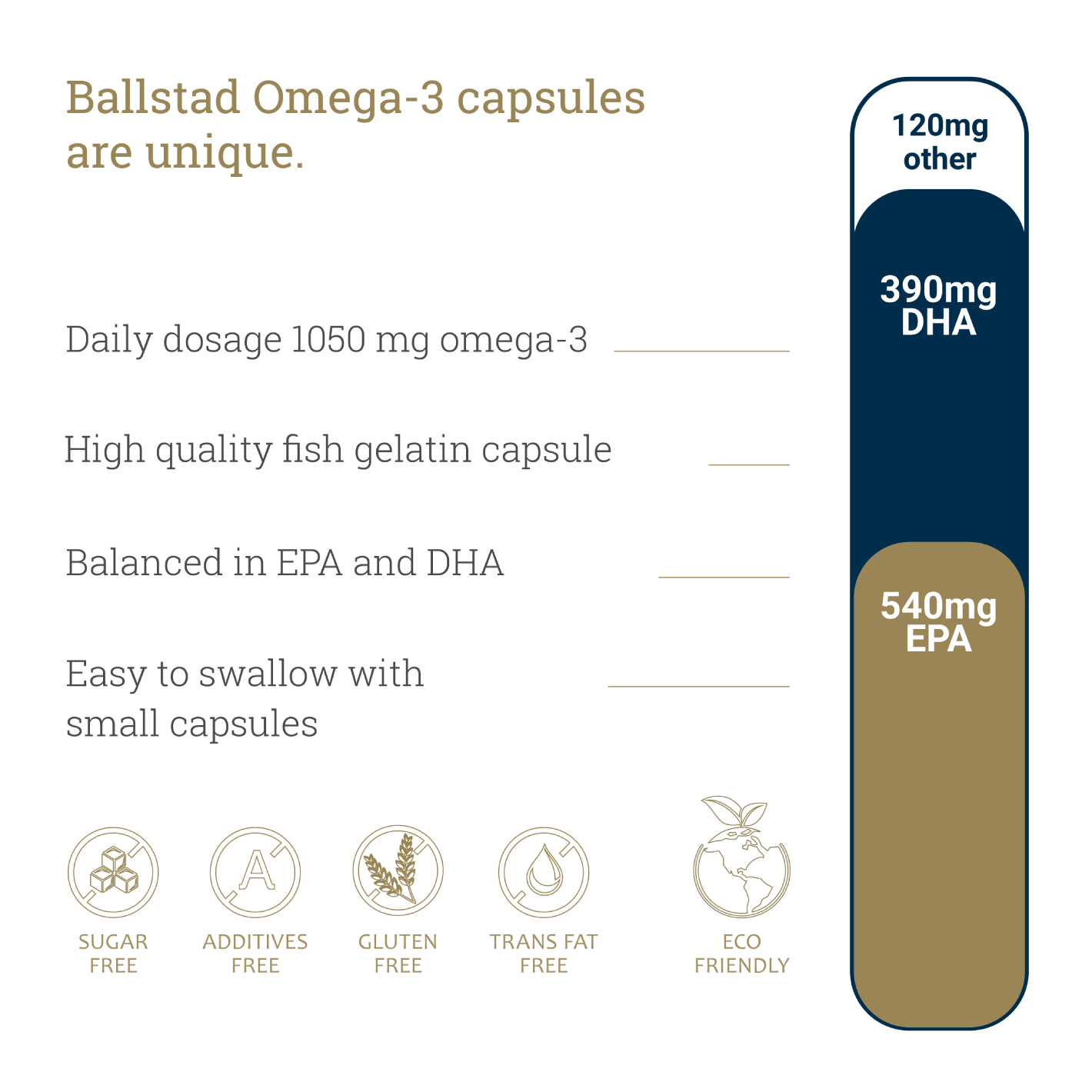
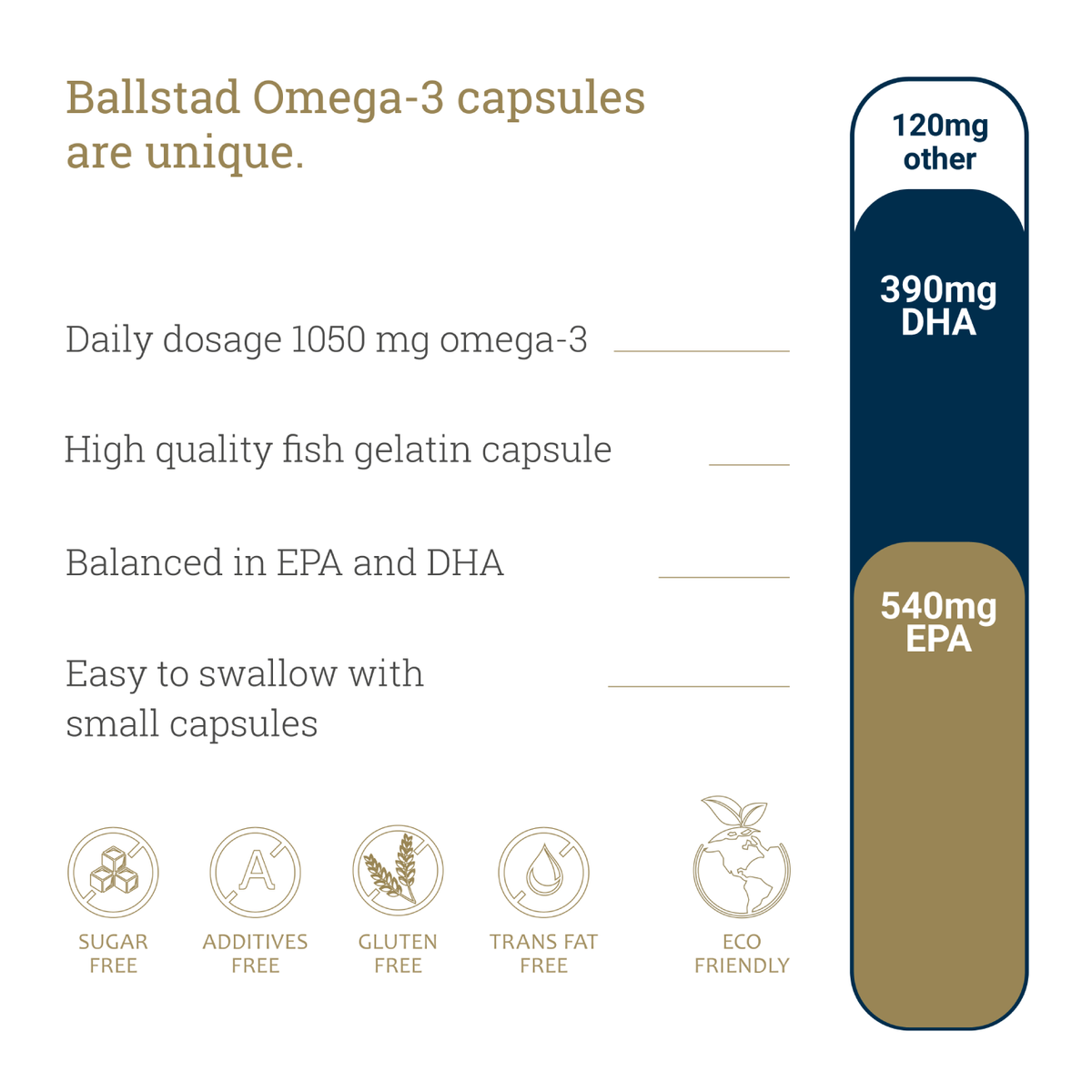
The best-known marine Omega-3 fatty acids are EPA (eicosapentaenoic acid) and DHA (docosahexaenoic acid), which are naturally found in fatty fish and fish oil.
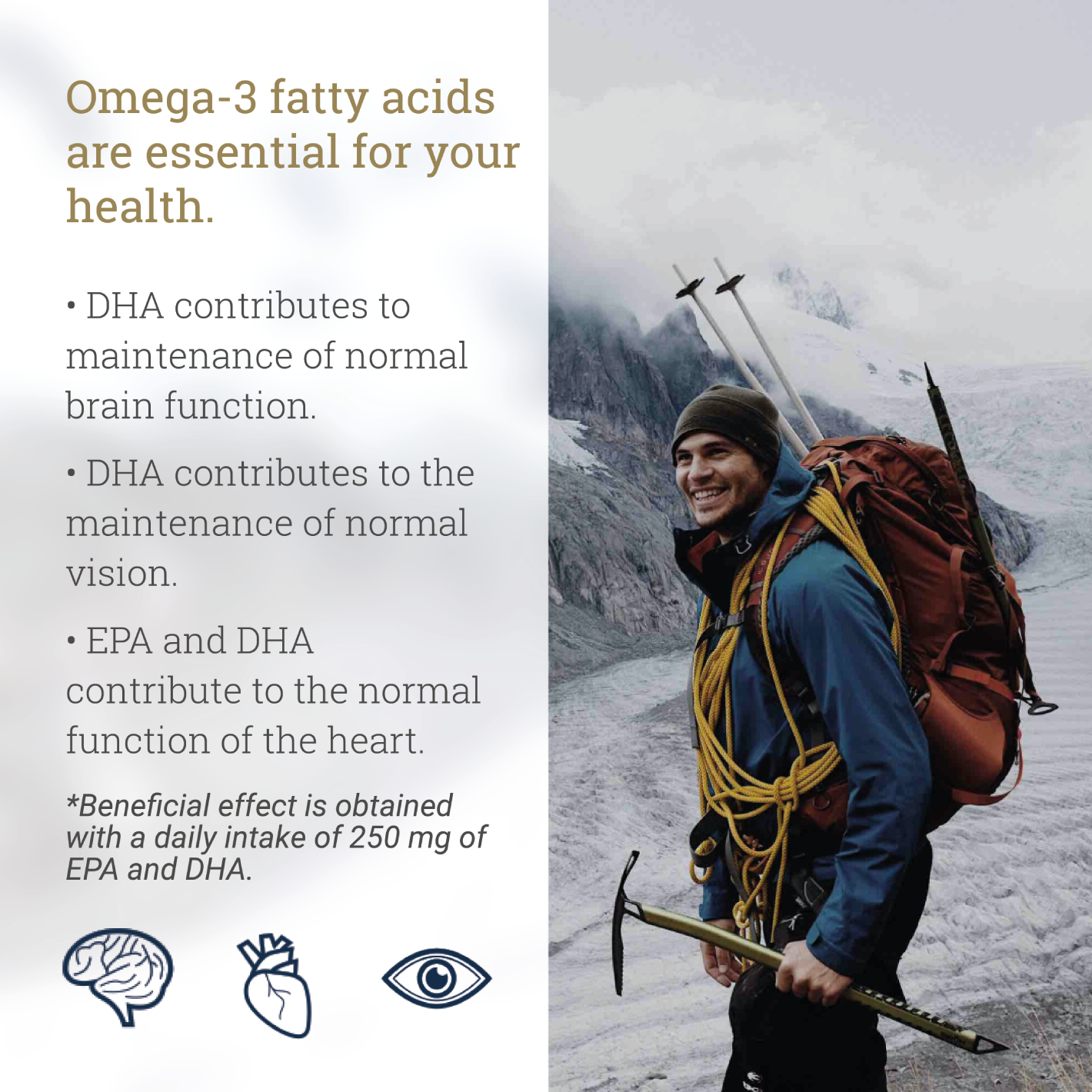
EPA and DHA are incorporated into cell membranes and have been studied extensively in areas including cardiovascular health, brain function and healthy ageing.
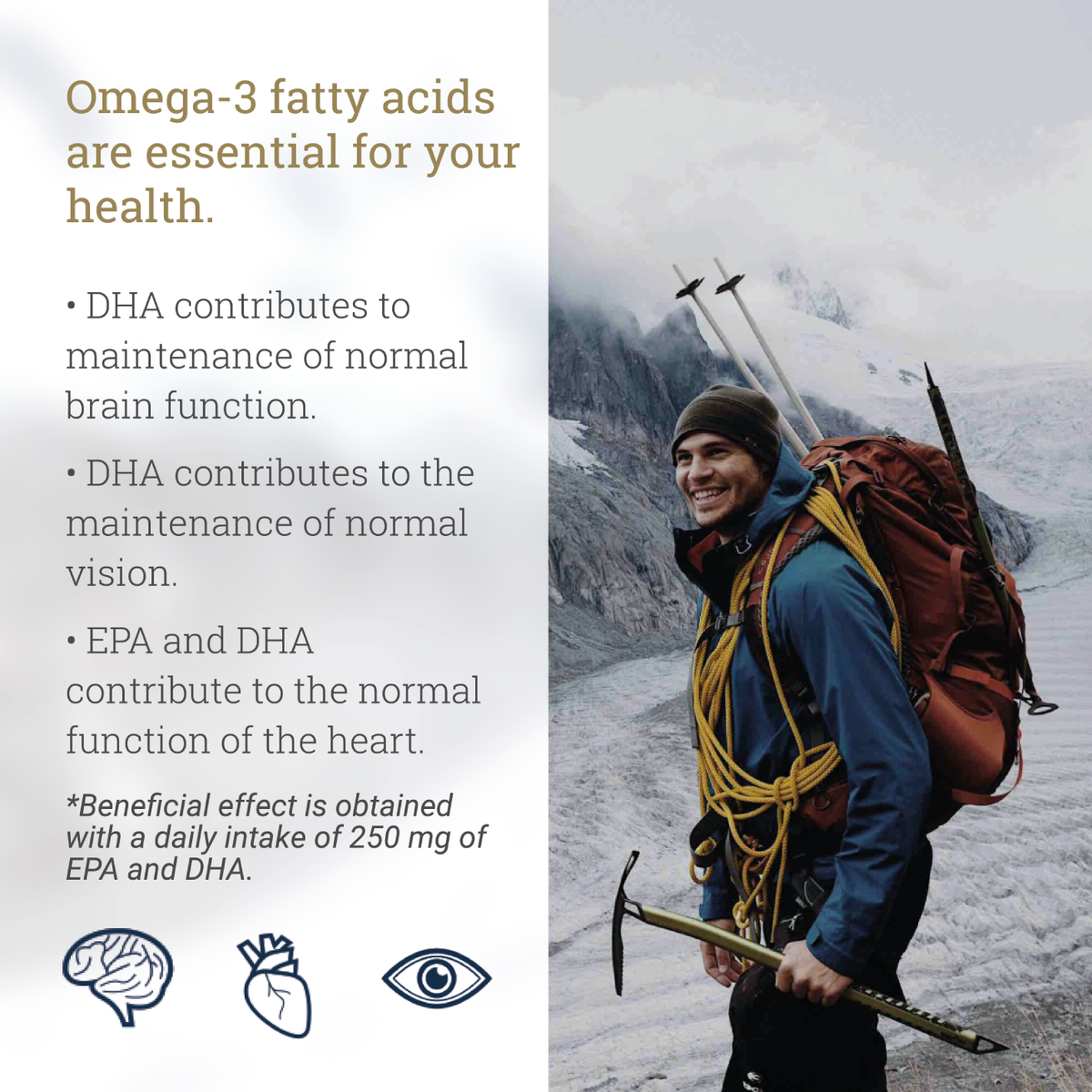
Their established physiological roles are important. For example, the European Food Safety Authority has concluded that a daily intake of 250 mg of EPA and DHA contributes to the maintenance of normal heart function.[4]
But this does not mean that Omega-3 alone determines how well we age.
A better way to look at it is as one component of a much larger nutritional pattern.
A diet that regularly provides essential nutrients, sufficient protein, fibre and high-quality sources of unsaturated fats — alongside an active lifestyle — creates a stronger nutritional foundation for healthy ageing.
Think Beyond “Good” and “Bad” Fat
Rather than simply asking, “How much fat do I eat?”, it can be more useful to ask:
“Where does the fat in my diet come from?”
A varied diet can include sources such as:
-
Fatty fish, providing EPA and DHA
-
Extra virgin olive oil, rich in monounsaturated fatty acids
-
Walnuts and other nuts
-
Seeds such as flax, chia and hemp
-
Avocado
This shift from quantity alone toward fat quality and overall dietary pattern is important.
Research examining dietary fat and long-term health outcomes has repeatedly highlighted that different types of fat should not necessarily be considered nutritionally equivalent.[2,3]
Longevity Is Built Through Habits
Longevity is an exciting field of research, but it is easy for the concept to become complicated.
In reality, many of the principles associated with healthy ageing are surprisingly familiar:
Eat a varied and balanced diet.
Stay physically active.
Protect your sleep.
Maintain muscle and physical function.
Manage stress.
Stay socially connected.
Avoid smoking.
And make nutritious foods part of your everyday routine.
Omega-3 and other high-quality dietary fats can have a place within that foundation — but they are not shortcuts to longevity.
Because healthy ageing is rarely about one “miracle” ingredient.
It is about building habits today that your future self can benefit from for years to come.
Scientific References
-
World Health Organization. Healthy Ageing and Functional Ability. WHO defines healthy ageing as the process of developing and maintaining the functional ability that enables well-being in older age.
-
Zhuang P, et al. Dietary Fats in Relation to Total and Cause-Specific Mortality in a Prospective Cohort of 521,120 Individuals With 16 Years of Follow-Up. Circulation Research. 2019.
-
Mazidi M, et al. Association of Types of Dietary Fats and All-Cause and Cause-Specific Mortality: A Prospective Cohort Study and Meta-Analysis of Prospective Studies with 1,164,029 Participants. Clinical Nutrition. 2020.
-
European Food Safety Authority (EFSA). Scientific assessments concerning long-chain Omega-3 fatty acids (EPA and DHA). EFSA notes that 250 mg EPA+DHA per day is sufficient for the maintenance of normal cardiac function.
Disclaimer
Nutrition and healthy ageing are influenced by many factors, including overall diet, lifestyle, genetics and individual health status. Food supplements should not be used as a substitute for a varied, balanced diet and a healthy lifestyle.